

“If your brother or sister sins, go and point out their fault, just between the two of you” (Matthew 18:15). Have you ever considered why Jesus placed such a heavy emphasis on the “two of you”? Why not a council? Why not a public declaration? In the Roman political landscape of the first century, disputes were often settled in the forum: a place of public posturing, legal maneuvering, and social shaming. Yet, Jesus, the Master Teacher, introduced a radical changing of the guard. He moved the arena of conflict from the cold stones of the secular courthouse to the warm, relational soil of the household of God.
I believe many of us have lost this ancient art of biblical reconciliation. We have traded the hard work of love for the easy path of litigation, whether in our hearts or through our actions. At this point, we must ask ourselves: Are we acting as citizens of the Kingdom or as products of a litigious culture? At New Vision Ministries, we see our biblical teaching church as a training ground where we learn to navigate these “ruckuses” not with secular weapons, but with the Spirit of Christ.
1. Treating the Church Like a Secular Courtroom
The first mistake I often see is the tendency to view our grievances through the lens of rights and justice rather than grace and restoration. During the Intertestamental Period, the Jewish people lived under a complex web of oral traditions and Mosaic Law that often prioritized technical compliance over the spirit of the Law. We do the same when we bring our “case” to the leadership or the congregation before we have even attempted to bring it to God.
Listen! When we treat our fellow believers as defendants rather than family, we have already lost the battle. Paul warns us in 1 Corinthians 6:7, “The very fact that you have lawsuits among you means you have been completely defeated already.” Secular conflict is about winning; biblical reconciliation is about winning your brother.
2. Bypassing the Direct, Face-to-Face Confrontation

Secondly, we fall into the trap of cowardice masquerading as “politeness.” We are terrified of the “face-to-face.” We prefer to send a text, an email, or worse, we talk to everyone but the person we are offended by. Jesus is crystal clear in Matthew 18:15: the first step is private.
I have come to realize that many conflicts in a Christian community in New Bern could be resolved in ten minutes if we simply had the courage to sit across from one another with a humble spirit. Doubt should push you toward the person, not away from them! When we bypass this step, we build walls instead of bridges.
3. Feeding the “Ruckus” of Gossip
We often justify our gossip by calling it a “prayer request” or “seeking advice.” But Proverbs 16:28 tells us, “A perverse person stirs up conflict, and a gossip separates close friends.” In the early church, these “nobodies” who were once outcasts became a radical community of love. They understood that the tongue could either build the Body or burn it down.
When you share a grievance with someone who is neither part of the problem nor part of the solution, you are not seeking peace; you are seeking an ally for your war. This creates a “ruckus” that distracts us from the Great Commission. We must be a people who protect the reputation of our brothers and sisters as fiercely as we protect our own.
4. Forgetting the Heart of the Matter

At this point, we must address the heart. Mistake number four is focusing on the “what” while ignoring the “why.” Often, the surface-level conflict: a missed phone call, a perceived slight, a disagreement over music: is merely a symptom of a deeper heart issue.
“For where your treasure is, there your heart will be also” (Matthew 6:21). If your treasure is your own comfort or your own reputation, any threat to it will trigger a conflict. I believe the Holy Spirit uses conflict as a diagnostic tool. He allows the friction to reveal where we are still unyielded to Him. Are you more concerned with being right or with being like Christ?
5. Misunderstanding Authority and Accountability
In our modern age, we have a deep-seated distrust of authority. We want the benefits of the Body of Christ without the accountability that comes with it. However, the biblical model of church life is one of mutual submission and godly leadership.
Hebrews 13:17 instructs us, “Have confidence in your leaders and submit to their authority, because they keep watch over you as those who must give an account.” When conflict arises, and we refuse the counsel of our elders or the established process of the church, we are essentially saying that we are our own highest authority. This is a dangerous position for any believer.
6. Neglecting the Unity of the Body

Sixth, we fail to see how our personal conflicts affect the whole. We think, “This is just between me and them,” but that is a theological error. 1 Corinthians 12:26 says, “If one part suffers, every part suffers with it.”
When you harbor bitterness or refuse to reconcile, you are essentially causing an autoimmune disease within the Body of Christ. You are a part of a larger organism. Your lack of forgiveness hinders the spiritual flow of the entire local church. We must understand the Body of Christ as an interconnected family where individual peace is essential for collective power.
7. Prioritizing Feelings Over Faith
Finally, the greatest mistake is letting our feelings drive the bus. You may not feel like forgiving. You may not feel like the other person deserves mercy. But as I have often said, we live by faith, not by sight: or by feelings (2 Cor 5:7).
Forgiveness is not a feeling; it is a decision to release the debt because Christ released yours. During the Roman occupation, the early Christians were called to forgive their literal enemies who were persecuting them. How much more should we be able to forgive a brother or sister in the pew next to us?
The Way Forward: Restoration and Fellowship
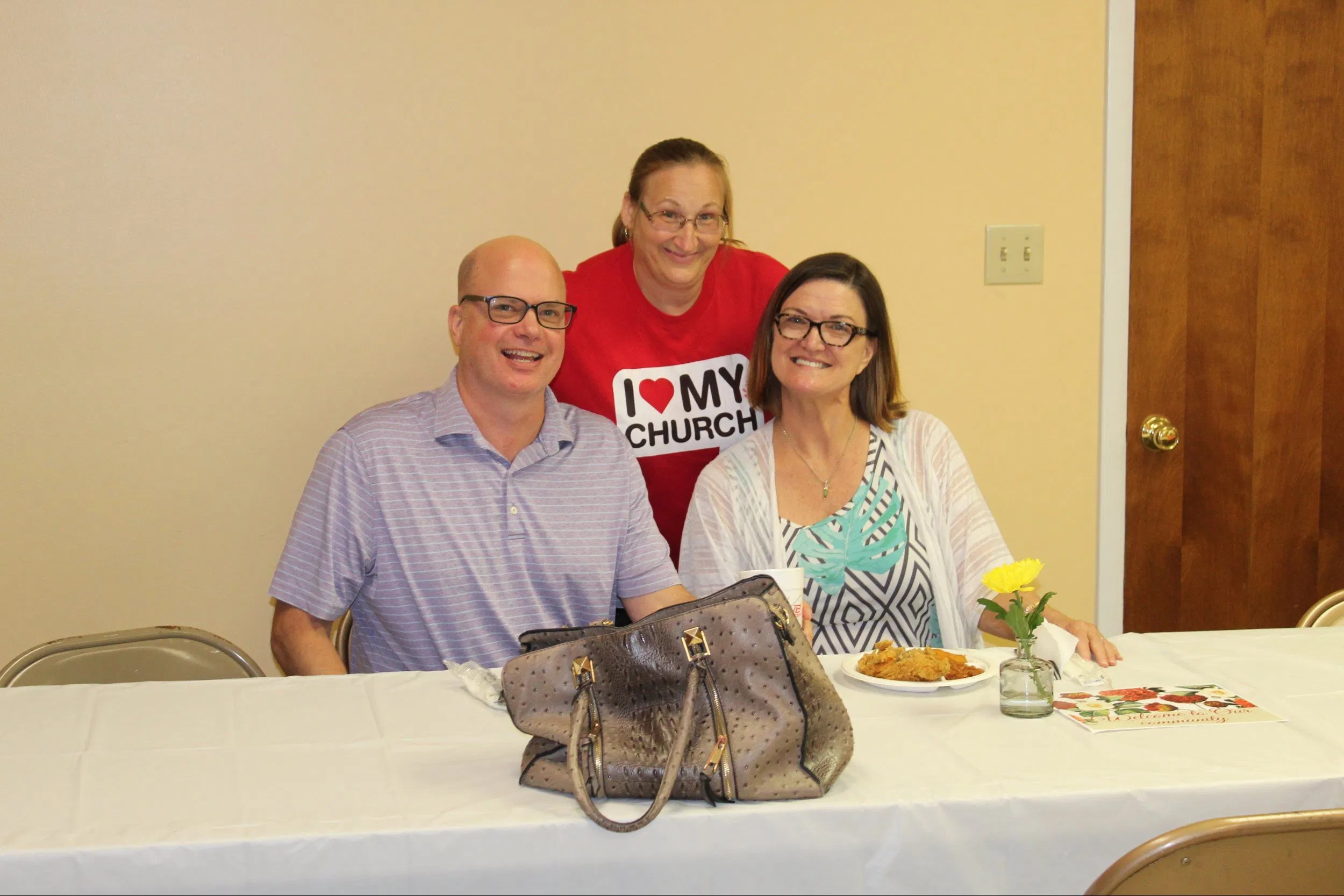
Listen to me clearly: Conflict is inevitable, but division is a choice. The goal of every biblical confrontation is not to win an argument, but to restore a relationship. We want to get back to the table! We want to get back to the fellowship, the “breaking of bread,” and the shared mission of reaching New Bern for Jesus.
At New Vision Ministries, we believe that the world will know we are His disciples by our love for one another (John 13:35). That love is most visible not when things are easy, but when things are difficult and we choose to stay, to talk, and to forgive.
Are you struggling with a conflict today? Do not let the sun go down on your anger. Take that first step. Go to your brother. Go to your sister. Trust that the same God who reconciled the world to Himself through Christ will empower you to reconcile with those in His family.
If you are looking for a community that values deep biblical teaching and real, transformative relationships, we invite you to join us this Sunday at 10 AM. Let us learn together what it means to live as the true Body of Christ.
Faith over feelings. Community over conflict. Christ over all.
Leave a Reply